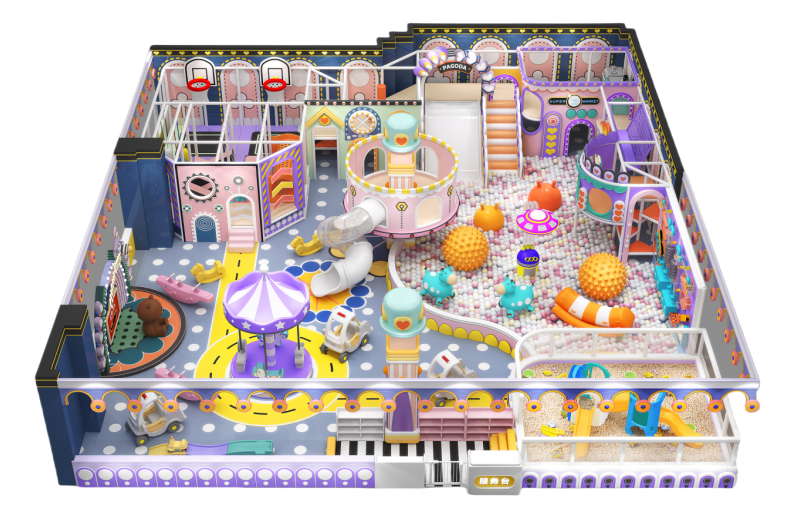
Children’s indoor play equipment is not only a source of fun for children, but also a serious commercial investment for indoor playground operators, family entertainment centers, and shopping malls. Understanding the cost structure, lifespan, age suitability, and profitability of indoor play equipment is critical before launching or expanding an indoor playground business.
At Qule Amusement Equipment, we help clients worldwide plan, design, and build sustainable indoor playground projects by combining professional manufacturing expertise with real-world operational experience.
This guide answers the most frequently searched business-related questions about children’s indoor play equipment, helping investors and operators make informed decisions.
The cost of children’s indoor play equipment varies significantly depending on size, customization level, materials, and target age group. There is no one-size-fits-all price, but understanding the main cost factors helps set realistic budgets.
Indoor playground projects are usually priced based on square meters or square feet. Larger play areas naturally require more materials, labor, and design work.
Small indoor play areas: entry-level investment
Medium-sized indoor playgrounds: balanced cost and capacity
Large commercial indoor parks: higher upfront investment, higher revenue potential
Standard designs are more affordable, while fully customized children’s indoor play equipment—including unique themes, branded elements, and complex structures—requires higher design and manufacturing input.
High-quality foam padding, flame-retardant PVC, reinforced steel frames, and certified plastics increase safety and durability but also influence cost.
Installation and logistics
Safety flooring
Design and planning services
Maintenance and spare parts
While initial cost is important, long-term value and reliability should always be prioritized over the lowest price.
The lifespan of children’s indoor play equipment depends on manufacturing quality, usage intensity, maintenance practices, and environmental conditions.
High-quality commercial indoor play equipment typically lasts:
8–12 years in standard commercial environments
Longer with proper maintenance and periodic upgrades
Material quality
Daily visitor volume
Maintenance frequency
Staff supervision quality
Regular inspections and timely replacement of worn components can significantly extend service life.
Modular children’s indoor play equipment allows operators to replace or upgrade individual modules instead of the entire structure, reducing long-term costs.
Children’s indoor play equipment is designed to serve a wide age range, typically from toddlers to pre-teens. Proper zoning is essential for safety and engagement.
Low-height structures
Soft play elements
Sensory and exploratory activities
Climbing elements
Role-play zones
Interactive learning features
Multi-level play systems
Obstacle courses
Skill-based challenges
Well-designed indoor playgrounds accommodate multiple age groups through clearly separated but visually connected zones.
Yes—when properly planned and operated, indoor play equipment businesses can be highly profitable. Their success is driven by repeat visits, predictable demand, and scalable operations.
Entry tickets
Membership programs
Birthday parties and events
Food and beverage sales
Merchandise and add-on services
While initial investment may be significant, indoor playgrounds benefit from:
Year-round operation
Low weather dependency
High customer retention
Strategic layout design and age-diverse play offerings directly increase average visit duration and revenue per customer.
Operating a children’s indoor play equipment business requires compliance with local regulations and appropriate insurance coverage.
Business operation license
Fire safety approval
Health and sanitation permits
Equipment safety compliance certificates
Public liability insurance
Property insurance
Employee insurance
Working with certified manufacturers simplifies regulatory approval and insurance processes.
Understanding peak attendance helps operators optimize staffing, pricing, and promotions.
Weekends
Public holidays
School vacations
Afternoons after school hours
Off-peak hours can be monetized through:
School group visits
Discounted weekday passes
Special events and workshops
Guangzhou Qule Amusement Equipment Co., Ltd. is a comprehensive enterprise specializing in research, design, production, sales, and chain investment operation of children’s amusement products.
With over 5,000 cooperation cases, Qule has delivered safe, innovative, and high-quality indoor play solutions for major theme parks and commercial centers. Our focus on customized services ensures every project aligns with market demand and long-term operational goals.
Many indoor playgrounds reach break-even within 1–3 years, depending on location, size, and management.
Yes. Modular designs allow phased upgrades and expansion.
Absolutely. Properly scaled projects can succeed in both large and small markets.
Customized themes often attract more visitors and improve brand differentiation.
Understanding cost, lifespan, and business fundamentals is essential when investing in children’s indoor play equipment.
At Qule Amusement Equipment, we support clients from concept planning to long-term operation, delivering customized solutions that balance safety, creativity, and profitability.
? Contact us today to receive a professional consultation and tailored indoor play equipment investment plan.



留下您的信息