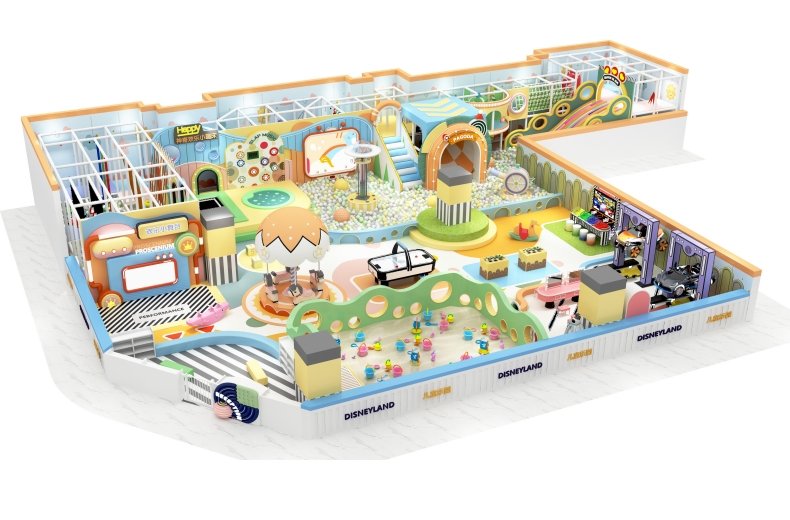
Children’s indoor play equipment is a long-term investment that directly impacts child safety, operational efficiency, and business profitability. Whether you are opening a new indoor playground or managing an existing amusement facility, proper installation, routine maintenance, and regular safety inspections are essential for long-term success.
At Qule Amusement Equipment, we design and manufacture professional indoor play solutions that are engineered not only for fun and creativity, but also for easy installation, long service life, and international safety compliance.
This comprehensive guide focuses on the most frequently searched installation and maintenance questions related to children’s indoor play equipment, helping operators, investors, and facility managers understand best practices from day one.
Unlike temporary toys or home-use playsets, commercial children’s indoor play equipment is designed for high-frequency use, multiple age groups, and strict safety requirements. Improper installation or neglected maintenance can lead to:
Increased safety risks for children
Higher repair and replacement costs
Operational downtime
Regulatory or insurance issues
Damage to brand reputation
A professionally installed and well-maintained indoor playground, on the other hand, ensures smooth operation, customer trust, and stable long-term revenue.
Installing children’s indoor play equipment is a structured engineering process that should always follow professional design plans and safety standards. Below is a step-by-step overview of how commercial indoor playground installation is typically carried out.
Before installation begins, a detailed site assessment is essential. This includes:
Accurate measurement of floor area and ceiling height
Evaluation of load-bearing capacity
Emergency exit planning
Fire safety and ventilation considerations
Power and lighting layout
Professional manufacturers like Qule provide customized layout designs to ensure the play equipment fits the space efficiently while complying with safety regulations.
The floor must be level, clean, and structurally sound before installation. Most indoor play equipment systems require:
Shock-absorbing safety flooring
Anti-slip surfaces
Moisture-resistant materials
Proper flooring reduces impact injuries and improves hygiene management.
The core structure of children’s indoor play equipment is usually built from galvanized steel pipes. During installation:
Frames are assembled according to engineering drawings
All joints are securely fastened
Vertical alignment and load stability are checked
This stage is critical, as the frame determines the overall strength and safety of the entire system.
Once the structure is complete, individual play elements are installed, including:
Slides and climbing structures
Ball pools and crawl tunnels
Interactive panels
Themed decorative elements
All components are padded, enclosed, and wrapped with soft protective materials to eliminate sharp edges and pinch points.
Before opening to the public, the entire children’s indoor play equipment system undergoes:
Structural stability testing
Load-bearing verification
Visual safety inspection
Operational walkthrough
Only after passing these checks should the playground be officially opened.
Routine maintenance is essential to preserve the safety, appearance, and performance of children’s indoor play equipment. A structured maintenance plan helps operators prevent small issues from becoming costly problems.
Daily checks are simple but extremely important. These include:
Visual inspection of all play areas
Checking for loose components
Cleaning high-touch surfaces
Removing debris or foreign objects
Daily cleaning not only ensures safety but also improves customer satisfaction and hygiene perception.
On a weekly or monthly basis, operators should:
Inspect connectors and fasteners
Check padding elasticity and surface wear
Examine slides and plastic parts for cracks
Test stability of climbing structures
Minor repairs should be handled immediately to prevent escalation.
Children’s indoor play equipment is used by many children daily, making regular deep cleaning essential. Professional cleaning schedules should include:
Disinfection of soft play surfaces
Ball pool cleaning
Ventilation and odor control
Working with an experienced manufacturer ensures easy access to replacement parts and technical guidance. Qule Amusement Equipment provides long-term support to help operators maintain equipment performance over time.
Safety inspection frequency depends on usage intensity, local regulations, and age group served. However, industry best practices generally follow a multi-level inspection system.
Staff should conduct basic visual checks every day before opening. This includes:
Obvious damage or wear
Loose padding or coverings
Foreign objects in play areas
More detailed inspections should be performed by trained personnel, focusing on:
Structural integrity
Fastening systems
Load-bearing components
At least once a year, children’s indoor play equipment should be inspected by professional technicians or third-party safety inspectors to ensure compliance with standards such as:
ASTM (United States)
EN 1176 / EN 1177 (Europe)
Local fire and safety regulations
These inspections help operators maintain insurance coverage and regulatory approval.
Choosing a reliable manufacturer is just as important as daily maintenance. Guangzhou Qule Amusement Equipment Co., Ltd. is a comprehensive enterprise specializing in the research, design, production, sales, and chain investment operation of children’s amusement products.
With over 5,000 cooperation cases, Qule has provided safe, innovative, and high-quality amusement equipment for well-known theme parks and indoor playgrounds. Our focus on customized services ensures that every project meets both creative and safety requirements.
By integrating professional design, standardized production, and attentive after-sales service, we help clients reduce operational risks and maximize long-term value.
For commercial projects, professional installation is strongly recommended to ensure safety, stability, and compliance with standards.
Depending on project size, installation can take from several days to a few weeks.
Delaying repairs increases safety risks and can lead to higher replacement costs or operational shutdowns.
Routine maintenance costs are relatively low compared to the long-term benefits of safe operation and extended equipment lifespan.
Proper installation, regular maintenance, and structured safety inspections are the foundation of a successful indoor playground.
At Qule Amusement Equipment, we provide end-to-end support—from customized design and manufacturing to installation guidance and long-term maintenance advice.
? Contact us today to receive a professional consultation and tailored children’s indoor play equipment solution for your project.



留下您的信息